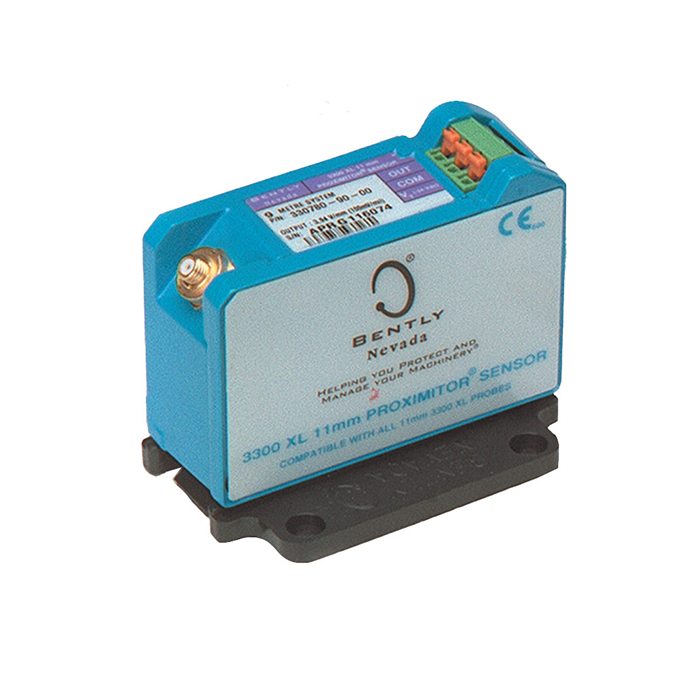
Introduction: Why Export Classification Matters
For engineers, procurement teams, and compliance professionals, understanding export classification is essential when sourcing and shipping industrial instrumentation globally. Whether you’re purchasing vibration monitoring systems or proximity probes, export control requirements can directly impact delivery timelines, legal compliance, and overall project execution.
If you work with Bently Nevada instrumentation, one of the most common questions is: What is the correct ECCN? This guide explains how Export Control Classification Numbers (ECCNs) apply to these products and how to approach classification with confidence.
What Is an ECCN?
An Export Control Classification Number (ECCN) is a code used under the U.S. Export Administration Regulations (EAR) to identify items that may require export controls.
ECCNs are managed by the U.S. Department of Commerce’s Bureau of Industry and Security (BIS) and are listed in the Commerce Control List (CCL). Each ECCN:
- Identifies the technical characteristics of an item
- Determines whether an export license is required
- Helps assess restrictions based on destination, end user, and end use
ECCN vs EAR99
- EAR99: Items that are subject to the EAR but not specifically listed on the CCL. These typically have fewer restrictions.
Specific ECCNs (e.g., 3B001): Apply to more controlled items, often due to technical capabilities or potential dual-use applications.
Why ECCNs Matter for International Trade
Understanding ECCNs is critical for several reasons:
Compliance with Export Regulations
Incorrect classification can result in regulatory violations, fines, or shipment delays.
Shipping & Licensing Requirements
ECCNs determine whether you need an export license for certain countries or applications.
Risk Management
Proper classification ensures your organization avoids dealing with restricted end users or embargoed destinations.
Procurement Efficiency
Having ECCN information ready speeds up documentation for customs and logistics teams.
Bently Nevada Product Categories & Typical ECCNs
Bently Nevada instrumentation is widely used in condition monitoring and asset protection systems. While many of these products fall under EAR99, some may align with more specific ECCNs depending on their technical specifications.
Below is a breakdown of common product categories:
Probes (Proximity Probes)
Used to measure shaft displacement in rotating equipment.
- Typical ECCN: EAR99
- Notes: Most standard probes are considered low-risk industrial components.
Sensors (Vibration & Velocity Sensors)
Used for monitoring vibration levels in machinery.
- Typical ECCN: EAR99
- Possible Exception: Advanced or highly sensitive sensors could potentially fall under 3B001, depending on performance characteristics.
Vibration Monitors
Devices that analyze vibration data and trigger alerts or shutdowns.
- Typical ECCN: EAR99
- Consideration: Integrated systems with advanced processing capabilities may require closer review.
Monitoring Systems (e.g., Rack-Based Systems)
Complete machinery protection systems combining multiple inputs and analytics.
- Typical ECCN: EAR99
- Possible Exception: Systems with sophisticated signal processing or high-speed data acquisition could potentially be evaluated under 3B001.
Summary Table: Bently Nevada ECCN Overview
| Product Category | Typical ECCN | Notes |
|---|---|---|
| Probes | EAR99 | Standard industrial components |
| Sensors | EAR99 | Most common classification; verify for high-spec models |
| Vibration Monitors | EAR99 | Generally low control, but review advanced configurations |
| Monitoring Systems | EAR99 | Complex systems may require deeper technical classification review |
Important: These classifications are provided as general guidance only and may vary depending on specific product configurations and technical parameters.
How to Confirm the Correct ECCN
To ensure full compliance, ECCN classification should always be verified using reliable sources:
Manufacturer Confirmation
The most accurate ECCN will come directly from the manufacturer. This is especially important for:
- Custom configurations
- High-spec or specialized equipment
- Integrated systems
BIS (Bureau of Industry and Security) Website
You can review the Commerce Control List and classification guidelines directly through BIS resources.
Internal Compliance Teams
Larger organizations often have export compliance specialists who can:
- Validate classifications
- Assess licensing requirements
- Maintain audit documentation
Third-Party Export Consultants
For complex cases, external compliance experts can provide formal classification support.
Compliance Disclaimer
ECCN classifications such as EAR99 or 3B001 mentioned in this article are intended for general informational purposes only. Actual classification may vary based on specific product specifications, technical capabilities, and regulatory updates.
Always confirm ECCN details with the manufacturer or a qualified export compliance professional before using this information for shipping, documentation, or legal purposes.
Conclusion: Stay Compliant and Informed
Export classification is a critical step in sourcing and shipping Bently Nevada instrumentation globally. While many probes, sensors, and monitoring systems are commonly classified as EAR99, it’s essential to verify each product individually especially for advanced or specialized equipment.
By understanding ECCNs and following proper verification processes, your team can avoid delays, ensure compliance, and streamline international operations.
Explore Our Bently Nevada Solutions
Looking for reliable instrumentation with full export support?
- Browse Bently Nevada Probes
- View Vibration Sensors
- Explore Monitoring Systems
Contact our team for ECCN Support, our team is here to help you select the right products and provide guidance on export classification to support your global projects.